

10 Proven Sales Prospecting Techniques for In-home Service Businesses
Discover 10 easy ways to attract more clients for your in-home service business


Sales prospecting is the process of identifying and contacting potential customers in order to generate new revenue. And 42% of sales reps say it’s the most challenging part of the sales process. So, how do you do it successfully without spending hours scouring the internet for leads?
I’m glad you asked.
Here are ten proven sales prospecting techniques in-home service businesses can use to bring in more revenue and get as close to guaranteeing sales success as humanly possible.
1. Run PPC and Local Services Ads
In urgent situations, like, say, a pipe bursting and flooding a kitchen, potential customers rarely have time to sift through pages of results for local service businesses who can solve their problem ASAP. This is where Pay-Per-Click (PPC) and Google's Local Services Ads (LSAs) come in.
In our hypothetical pipe scenario, all a customer is looking for is a decent plumber who is open and easy to contact. To capture this sale, a plumbing business would set up LSAs that appear when someone within their service area searches for “quick fixes to a burst pipe.” The ad would show hours, ratings and reviews, and service areas and appear at the top of the search results, a step above conventional PPC ads. This gives a potential customer enough information to act and reduces the likelihood they’ll keep scrolling to find someone else.

2. Gather reviews and customer feedback
Collecting and displaying reviews and feedback is essential for in-home service businesses looking to build trust and foster a reliable reputation. It shows a potential customer that other people have used and loved the business, and can be an effective way of sales prospecting without any legwork! (Especially as 98% of consumers read reviews before choosing a company.)
It’s unlikely that you’ll collect many reviews without asking customers for them. Consider including a review request in any appointment follow-up texts/emails, and if someone compliments your work, ask if they’d consider leaving a review so others can discover your business.
On top of that, actively responding to all positive and negative reviews shows potential customers that you’re proactive about addressing any complaints and that you value your customers' business.
Related: How to handle complaints about your service business
3. Optimize your Google Business Profile
Leveraging your Google Business Profile to its fullest potential is critical in bolstering your in-home service business's visibility and SEO ranking. The more visible your business, the more likely you are to attract new customers, and the less manual sales prospecting your team needs to do.
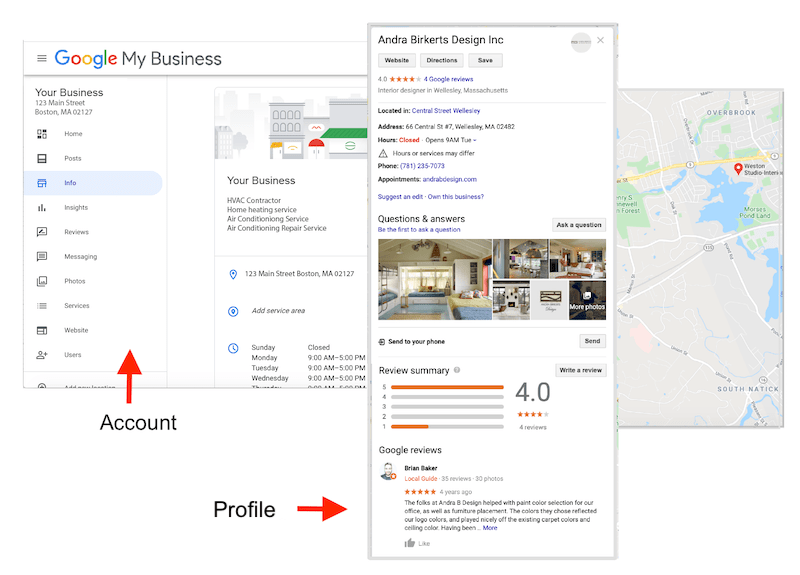
- Create a Google My Business account to control your profile details and engage with customer reviews.
- Use the dashboard to respond to customer inquiries and reviews promptly.
- Showcase your business's standout features and operational hours on the search results page.
- Boost SEO by naturally incorporating critical terms in your profile descriptions and posts.
- Ensure information accuracy to build trust and elevate your ranking, aiming to secure a spot in Google's local “3-Pack” through regular updates and active engagement.
For more ways to optimize your Google Business Profile, take a look at our article “10 ways to optimize your Google My Business Profile to attract more customers.”
4. Add a live chat feature to your website
Implementing a live chat feature on your in-home service business’s website allows customers to instantly ask questions and receive answers without leaving your webpage. For instance, an AC repair service could use live chat to quickly address service offerings, pricing, and availability inquiries. Alternatively, businesses could use it to generate quotes for customers inquiring about services if they operate without a fixed pricing structure.
If your team doesn’t have the capacity to monitor a live chat, consider creating an automated version that anticipates potential inquiries and provides pre-written answers with a way for customers to get in touch if they still have questions.
5. Ask for referrals
Alongside collecting reviews, in-home service businesses should make it a regular practice to request referrals from satisfied clients. For instance, if a client praises your service, seize that moment to ask if they know anyone else who could benefit from your offerings.
Moreover, make this process straightforward for your clients—clearly describe the customers you are looking for. For instance, a pest control business might ask for connections to homeowners in a specific area. Being direct and clear not only simplifies it for your client but can also lead to high-quality referrals that are more likely to convert.
Another effective way to increase referrals is to create a referral program that incentivizes customers to refer friends and family by offering discounts on future services for every person they successfully refer.
6. Get more Nextdoor recommendations
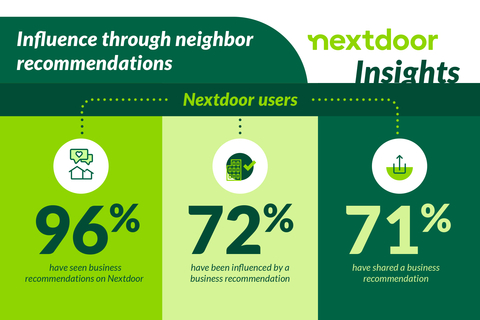
For in-home service businesses operating at a local level, getting more Nextdoor recommendations can be an effective way to boost your business's local presence.
To get started, you must claim your Business Page on the Nextdoor platform. Once you’re up and running, you can share exclusive deals with your neighbors to foster a community-centric brand image. You can also initiate conversations by setting up ads to get more messages, answer potential customers' questions, and showcase what makes your offerings different from competitors.
Tip: Keep a close eye on your ad performance through the Nextdoor dashboard to tailor your strategies for better results.
7. Streamline cross-platform communications
Streamlining cross-platform communications is vital for in-home service businesses aiming for efficient operations and sales prospecting. Utilizing tools like Zapier to sync data between apps such as Gmail and Salesforce automatically saves time on manual entries and ensures data is not corrupted or duplicated during transfer.
Additionally, consider unified communication platforms to centralize messages from various channels. For instance, a tool like Slack can integrate communications from emails, texts, and other media into one hub, facilitating swift and organized responses to customer queries.
8. Send multi-touch email campaigns
Multi-touch email campaigns are a series of strategically timed emails sent to a targeted segment of your audience. These campaigns aim to improve customer engagement by creating personalized customer journeys.
How to create an effective multi-touch email campaign
- Set clear goals, e.g., lead generation, nurturing existing prospects, etc.
- Segment your audience based on distinct criteria like behavioral patterns to deliver highly relevant content at the right time.
- Craft emails that offer value and resonate with the recipient's current stage in the buyer's journey.
- Plan a logical sequence, ensuring a consistent progression guiding recipients toward conversion.
- Employ A/B testing to optimize various elements, e.g., subject lines and CTAs.
- Use analytics to track performance metrics and make data-driven decisions for continual improvement.
9. Engage with your target audience on social media
Engaging with your target audience on social platforms can significantly boost your sales prospects and product liability. Initiate a social selling strategy where you actively answer potential customers' queries and share content pertinent to their research on your products.
Consistent social selling activities on social media build trust and enhance your chance of meeting revenue goals by 40% compared to businesses needing to utilize social selling.
10. Build texting campaigns
Implementing texting campaigns can be an effective way to reach prospects directly and efficiently. Use concise, personalized messages to update them on new offerings or discounts.
For instance, a home-cleaning service might text: “Limited offer! Enjoy 20% off your next service when you book this week.”
Remember to integrate a clear call to action to encourage immediate responses. This strategy facilitates real-time engagement and also keeps your service top-of-mind for prospects.
Conclusion
The sales prospecting techniques outlined above are tried and tested and can be used by in-home service businesses in any industry to identify and capture new opportunities.
For tips and advice on running a successful service business, check out the MarketBox blog and free resource center.
Related Blog Posts


.svg)

Ready to transform your scheduling and operations?
Talk to our sales team and see how MarketBox can help you achieve more with less effort